

Forget what you’ve read. A stretch of sand that exists perfectly well without a single Instagram story being made on it. This is Inani Beach of Cox’s Bazar, and it’s the antidote to everything polished and planned.
The Road That Whispers “You’re Almost There”
Your journey to Inani begins long before you hit the sand. It starts on Marine Drive. The air gets cleaner. A vista so stupidly beautiful it feels fake. The Bay of Bengal is laid out beneath you like a vast, blue carpet, and the hills on your left are a tangled mess of green that feels ancient and alive.
Stop at the first chai stall you see on a bend. Drink the syrupy sweet tea. Don’t talk. Just look. This is the overture. Inani is already working its magic.
Inani Beach: Sand, Stone, and Silence
Then, you descend. And the first thing that hits you isn’t the view. It’s the sound. Or rather, the lack of it.
The roar of Cox’s Bazar is replaced by a hush. The crash of waves is softer here, more of a constant, gentle exhale. Your brain, so accustomed to noise, takes a minute to calibrate. Then you feel it: a profound, almost unsettling peace.
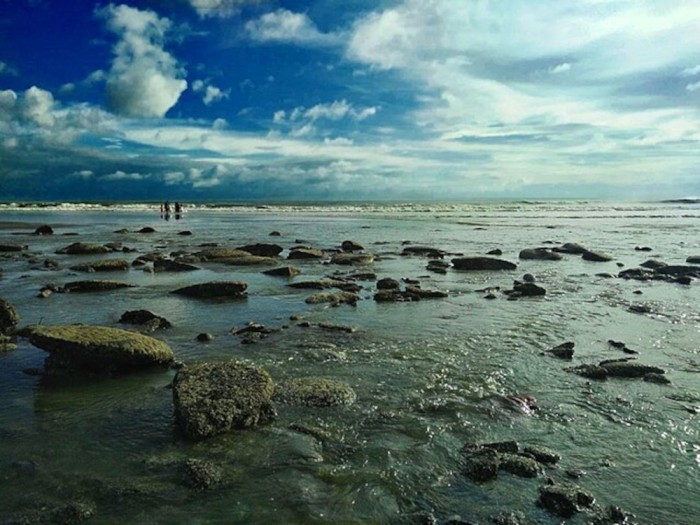
You’ll notice the stones next. Oh, the stones. Wikipedia calls them “scattered coral stones.” That’s so bland. These are the beach’s vertebrae. Jagged, dark, and polished smooth by a million tides, they look like the backbone of some mythical sea creature that decided to take a nap and never left. They’re not there for your amusement. They’re a reminder that this place is wild and doesn’t care about your comfortable shoes.
The Magic is in the Micro: Become a Rock Pool Explorer
This is the secret. Don’t just walk and look at the big picture. Get small. Get on your hands and knees.
Wait for the tide to pull back. That’s when the real show begins. The retreating water leaves behind a network of glistening, temporary worlds—rock pools. Each one is a self-contained universe.
Peer into one. Anemones cling to the coral, waiting for the water to return. I once spent forty-five minutes watching a single crab negotiate a pebble. It was more compelling than any movie. This is where Inani truly comes alive—not in its vastness, but in its incredible, minute details.
A Practicality: How to Actually Do This
How do you do Inani without messing it up?
- Get a Jeep: I’m serious about the Jeep. Find a driver in Cox’s Bazar. Negotiate a round trip. It should cost you around 2000-2500 Taka for the whole vehicle for a good, long afternoon. He’ll be your guide, your spotter, and will know the best secret stops.
- Pack Like a Survivor: Inani is not a mall. There are no 7-Elevens. Pack a backpack like you’re going on an expedition. Water. More water. Fruits, nuts, biscuits, whatever snacks you like. A towel. Sunscreen. A hat. A power bank. You are a self-sufficient island for the day.
- Eat Local, If You Can Find It: Behind the main tree line, there are often tiny, family-run shacks. A bamboo platform, a clay oven. If you see one, and they’re cooking, point at the pot of rice and fish curry. Eat it with your hands.
- Don’t be the person who litters. Whatever you bring in, you take out. That shell you love? Take a picture. The coral bone? Leave it be. Let it keep being beautiful for the next person who needs to find it.
The Cracked Tile and the Infinite Beach: An Afternoon at Inani
My mind had flatlined. It wasn’t thinking—just buzzing with the staticky panic of a television left on after broadcast hours. I had come to Cox’s Bazar—a name that conjures wide skies and endless waves, a place people save for years to see. And what held my attention?
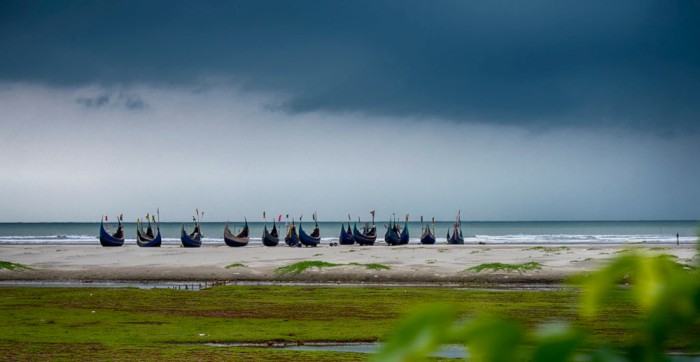
If I could just scrub it clean, maybe something else would make sense again. As if cleaning that one inch of tile could somehow reassemble whatever had come loose in me. And just past my window, the Bay of Bengal lay spread out—immense, blue, and completely empty of meaning. It didn’t look like water. It looked like a screen saver. Too perfect, too still. Like something designed to be ignored.
A friend, Rifat, found me like that. He didn’t ask if I was okay. He took one look at the vacant stare and said, “Right. We’re leaving. The car is outside.” It wasn’t an invitation. It was a rescue mission.
Inani Beach: The Wind and the Scale
And for the first time that whole damned day, I actually felt something. I took off my shoes. The sand was warm and surprisingly firm underfoot. And then I finally looked up from my own feet.
And my mind went completely, utterly blank.
The committee meeting in my head was adjourned. Indefinitely. Calling Inani a beach feels like calling a hurricane some rain. It’s something else entirely—some raw, unfinished piece of the world the sea had temporarily abandoned. The tide hadn’t just gone out; it had left the continent. And all of it—every stupid worry, every buzzing anxiety, that cracked tile that had felt so profoundly important—just… evaporated. They were no match for all that nothing. That glorious, humbling, endless nothing.
The Rock and The Letting Go
I started walking toward the distant water, but I never made it. I got distracted by the rocks. They’re everywhere. Not little pebbles, but huge, black, volcanic sculptures risen from the sand. They’re worn smooth in some places, jagged with barnacles in others.
I found one that was flat on top and climbed onto it. The surface was warm from the sun. I lay down on my back. The rock was solid. Unmoving. It had been here for a thousand years and would be for a thousand more. It didn’t care about my existential dread. It just was.
I closed my eyes. And I finally heard it.
The sound.
That was it. There was no bass note of traffic, no hum of appliances, no ping of notifications. The static in my head was replaced by this ancient, simple song. I fell asleep. Right there. A deep, dreamless, perfect sleep.
The Quiet We Bring Home
The drive back was completely silent. I was exhausted in a clean, hollowed-out way. We pulled up to my hotel. Rifat finally spoke. “The tile is still cracked,” he said. “But you are not.”
He was right. I went upstairs. The crack was there. But it was just a crack. It wasn’t a metaphor for my life anymore.
Inani Beach didn’t give me any answers. It didn’t need to. It just gave me scale. It was the kind of sight that doesn’t make you feel small—it makes you feel honest. For the first time, I understood my actual size. Not a hero, not a failure. Just a momentary flicker on a planet that has seen volcanoes and ice ages and will see so many more sunsets long after I’m dust.
My only real task? To pay attention. To stand there, quiet and awed, and let the sheer, untamed beauty of things leave its mark on me.The quiet I found on that rock? I brought it home with me. It’s in my pockets. And on the days the committee meeting tries to reconvene, I just close my eyes and listen for the wind.
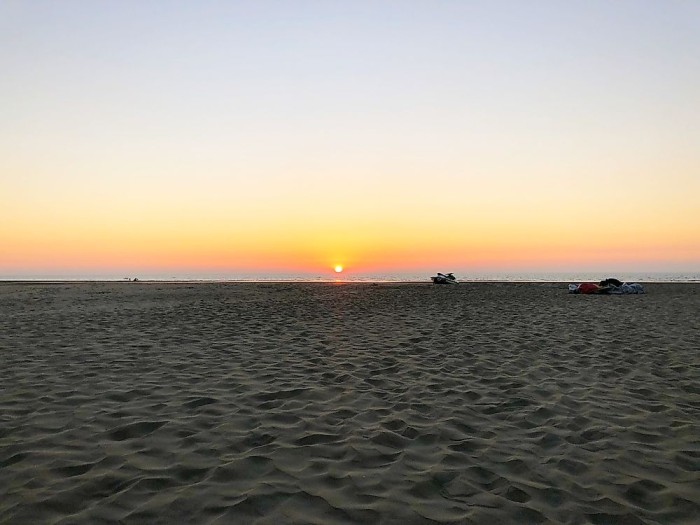
The Grand Finale You Didn’t Pay For: Sunset
Your driver will tell you it’s time to go. Tell him you’re staying – Inani Beach. And you just stand there. Or sit. In silence.
You’ll drive back in the dark, tired, sandy, and quiet. A little more real. Inani doesn’t entertain you. It changes you. Thanks for staying with Travel Mate Bangladesh.